LOG ENTRY: CRUISE POKER PREPARATION

Poker at Sea: The Complete Guide to Cruise Ship Poker

Poker on a cruise ship combines the excitement of the game with the unique atmosphere of being at sea. Unlike land-based casinos, onboard poker rooms offer a more intimate and social setting, often with stunning ocean views. Cruise ship poker rooms are typically smaller than land-based casinos, fostering a friendly community. The experience is enhanced by the ship's movement and the novelty of playing while travelling. Poker at sea is a popular evening activity for many cruise passengers.

Onboard poker offerings can vary by cruise line and ship. Some ships have dedicated poker tables, while others may offer poker as part of a larger casino area. Tournaments and cash games are common, with varying stakes. Cash games usually run in the evenings, with limits that cater to casual players. Tournaments are often scheduled on sea days and may have a buy-in fee. The poker room may be closed during port days or late at night. Poker is offered on many major cruise lines, including Royal Caribbean, Carnival, and Princess. Onboard poker rooms are usually located near the main casino area. Poker availability is subject to the ship's itinerary and casino operating hours. Some cruise lines offer poker lessons for beginners.

The Anatomy of an Onboard Poker Table

Table Design and Materials

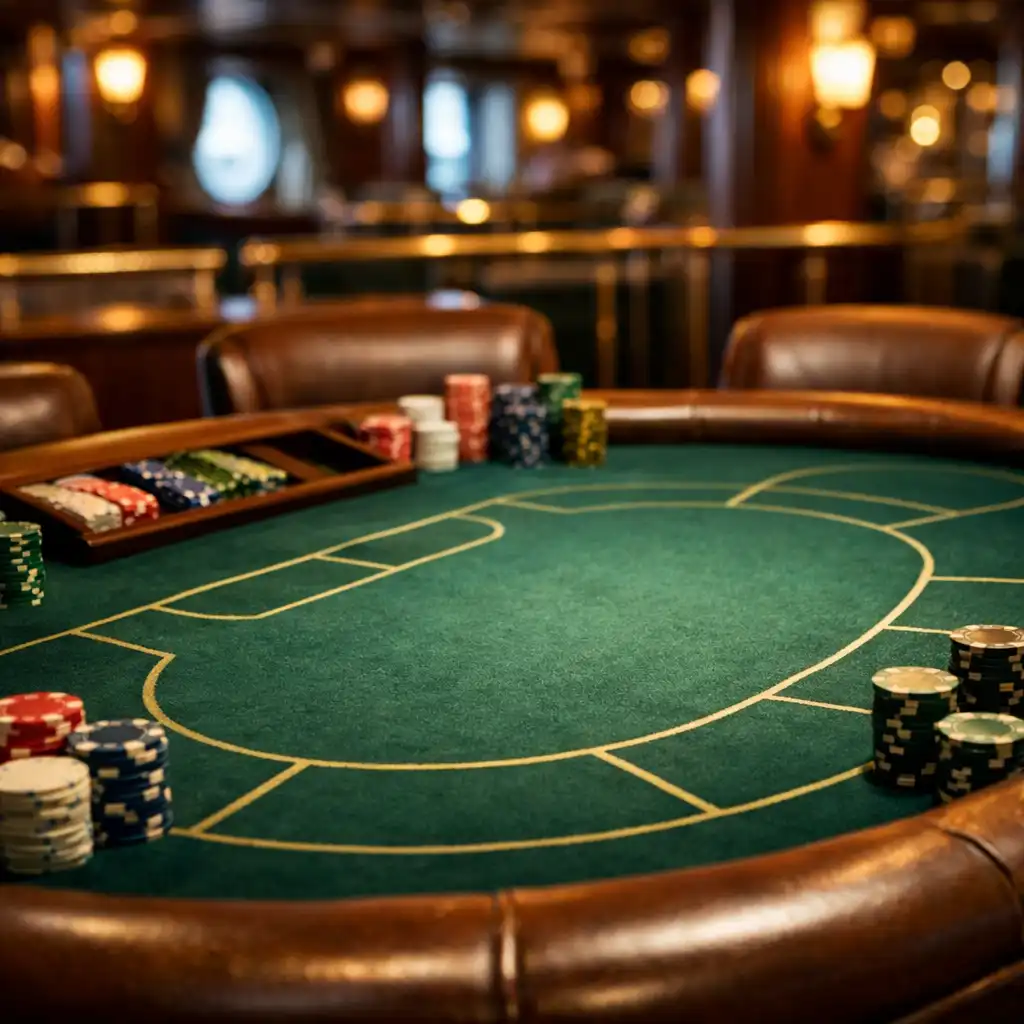
Cruise ship poker tables are similar to those in land-based casinos, typically oval or kidney-shaped, with a padded rail for player comfort. The playing surface is usually made of felt or a similar fabric, often in green or blue, with markings for player positions and the dealer area. Tables are designed to seat 8-10 players comfortably. The padded rail (armrest) is often upholstered in leather or vinyl. The felt surface may have the cruise line's logo or a decorative pattern.

TABLE SPECIFICATION Standard seating: 8-10 players Surface: Felt or similar fabric Rail: Padded leather or vinyl Felt function: Reduces card slippage

Dealer Position and Equipment

The dealer sits at a designated position, usually in the centre of the straight side of the table. The dealer manages the cards, chips, and pot, and enforces the rules. A drop box for the house rake may be present, depending on the cruise line's policy.

  • The dealer uses a shoe or a dealing box for cards.
  • A discard tray is located near the dealer for used cards.
  • The table may have built-in cup holders for player drinks.
  • Onboard poker tables are operated by trained casino staff.
  • The house rake, if any, is taken from each pot in cash games.

A close-up view of a physical poker table on a cruise ship, showing the green felt surface with betting lines and player positions, surrounded by padded leather armrests.
FIG. 01 — ONBOARD POKER TABLE, GREEN FELT

The Tools of the Trade: Cards and Chips

Playing Cards

Cruise ship poker games typically use standard 52-card decks, often made of plastic or a plastic-coated paper for durability. The cards may have a larger index for easier reading, and some cruise lines use custom-designed decks with their branding. Plastic cards are more resistant to bending and moisture, making them ideal for the humid sea air. Decks are replaced regularly to prevent marking and wear. The card backs usually feature a pattern that prevents seeing through the card. Cards are standard poker size (2.5 x 3.5 inches). The deck is shuffled by the dealer or an automatic shuffler.

Poker Chips

Poker chips on cruise ships are typically clay composite or ceramic, with denominations printed or inlaid. The chips are colour-coded by value, following standard casino colours. Chip values are clearly marked to avoid confusion. The chips may have the cruise line's logo or a nautical theme. Chips are used for both cash games and tournaments, with tournament chips often having no cash value. Chips are sanitised regularly for hygiene.

Standard poker chip colours and their corresponding values
Chip Colour Value
White$1
Red$5
Green$25
Black$100
Purple$500

Poker Variants You'll Find at Sea

Texas Hold'em

Texas Hold'em is the most popular poker variant on cruise ships, often featured in tournaments and cash games. Each player receives two private cards, and five community cards are dealt face-up. The goal is to make the best five-card hand. Betting rounds occur pre-flop, on the flop, on the turn, and on the river. No-limit Texas Hold'em is the most common format. Tournaments often have a structured blind schedule. Texas Hold'em is offered on most major cruise lines. Tournaments may have a buy-in ranging from $50 to $500.

Omaha

Omaha is similar to Texas Hold'em but each player receives four private cards, and they must use exactly two of them combined with three community cards. Omaha is often played as Pot-Limit, which can lead to larger pots. Omaha Hi-Lo is a popular split-pot variant. The game requires more strategic thinking due to the extra hole cards. Omaha is less common than Texas Hold'em but still offered on many ships. Omaha is available on select cruise lines, often during peak hours. Pot-Limit Omaha is the standard betting structure.

Seven Card Stud

Seven Card Stud is a classic poker variant that was popular before Texas Hold'em. Each player receives seven cards, three face-down and four face-up, with betting rounds after each card. The best five-card hand wins. There are no community cards in Seven Card Stud. The game requires careful observation of opponents' upcards. Seven Card Stud is less common on modern cruise ships but may be available upon request. Seven Card Stud is rarely offered as a tournament; it is usually a cash game. The game is played with an ante and a bring-in bet.

Playing by the Rules: Etiquette at Sea

General Poker Etiquette

Standard poker etiquette applies on cruise ships: act in turn, don't discuss your hand while it's live, keep your cards visible, and avoid splashing the pot. Being polite and respectful to the dealer and other players is essential.

  • Announce your actions clearly (e.g., 'call', 'raise').
  • Don't touch another player's chips or cards.
  • Tip the dealer when you win a pot (if tipping is customary).
  • Cruise ship poker rooms may have specific rules posted.
  • Dealers are trained to enforce etiquette.

Cruise-Specific Considerations

On a cruise, the poker room may have limited hours, and games may be paused during rough seas for safety. The ship's movement can affect chip stacks and cards, so players should be mindful. Smoking policies vary by cruise line and ship area.

Important: Games may be cancelled if the ship is in rough weather. Some cruise lines allow smoking in designated casino areas. The poker room may be closed while in port due to local regulations. Casino operating hours are set by the cruise line and may vary by itinerary. Smoking policies are enforced by ship staff.

Tips for a Successful Poker Experience at Sea

Bankroll Management

Set a budget for poker before you board and stick to it. Cruise ship poker games can be enticing, but it's important to play within your means. Consider the stakes and tournament buy-ins when planning your gambling budget.

CAPTAIN'S TIP

Decide on a daily or trip poker budget. Avoid chasing losses; take breaks when needed. Use cash or a cruise card for buy-ins, depending on the ship's policy. Cruise ship casinos accept cash and sometimes cruise cards linked to your onboard account. There may be a fee for cash advances on your cruise card.

Timing and Game Selection

Poker games are most active in the evenings and on sea days. If you're a beginner, look for low-stakes games or free lessons offered by the casino. Observing a game before joining can help you understand the dynamics.

  • Check the daily schedule for poker tournaments and cash game times.
  • Ask the casino staff about the skill level of the players.
  • Consider playing during off-peak hours for a more relaxed game.
  • Poker tournaments are often scheduled on sea days.
  • Free poker lessons are offered on some cruise lines.
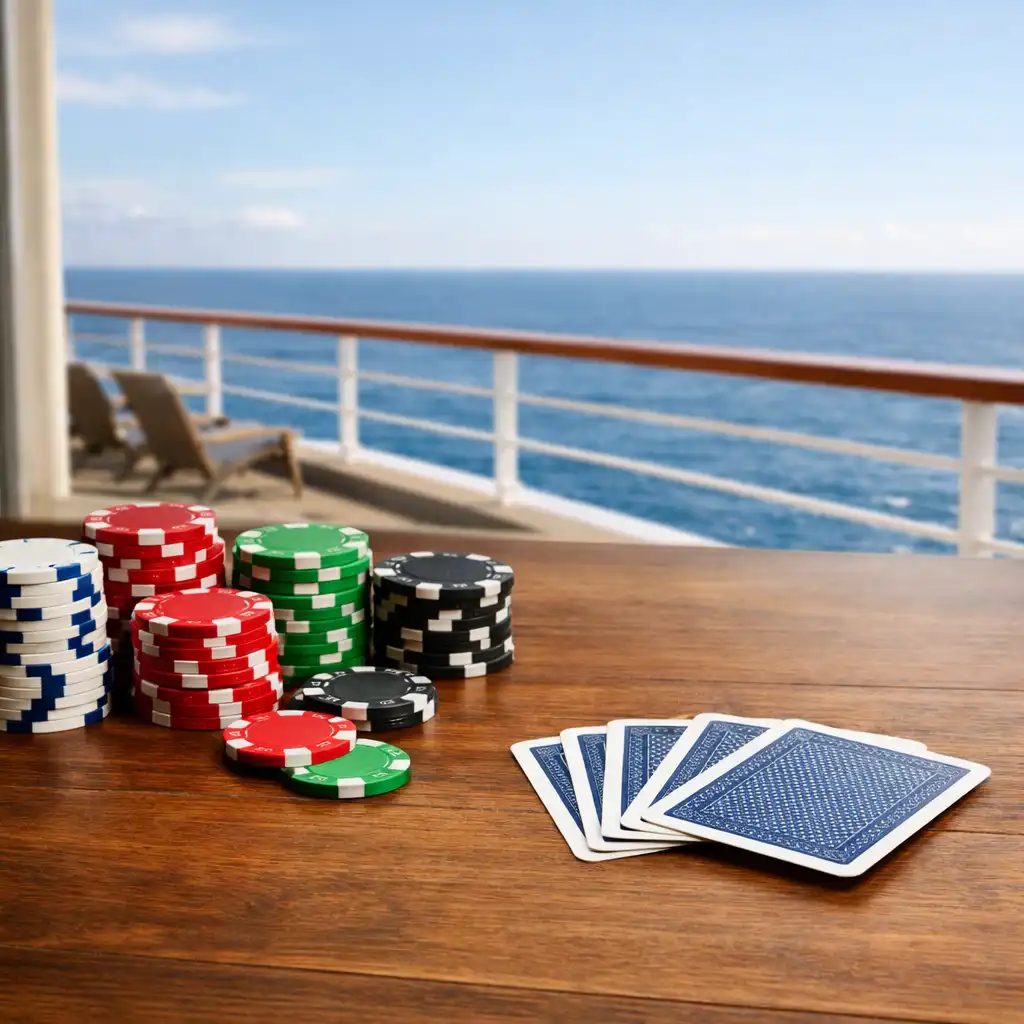
A still life of poker chips and playing cards on a wooden table, with a cruise ship deck and ocean view in the background through a window.
FIG. 02 — CHIPS AND CARDS, OCEAN VIEW